Learn the game
Start Your Pickleball Journey at Achasta
Whether you’ve never held a paddle or you’re returning to the sport, there’s no better place to begin your pickleball journey than at Achasta — the private golf and resort community in Dahlonega, Georgia.
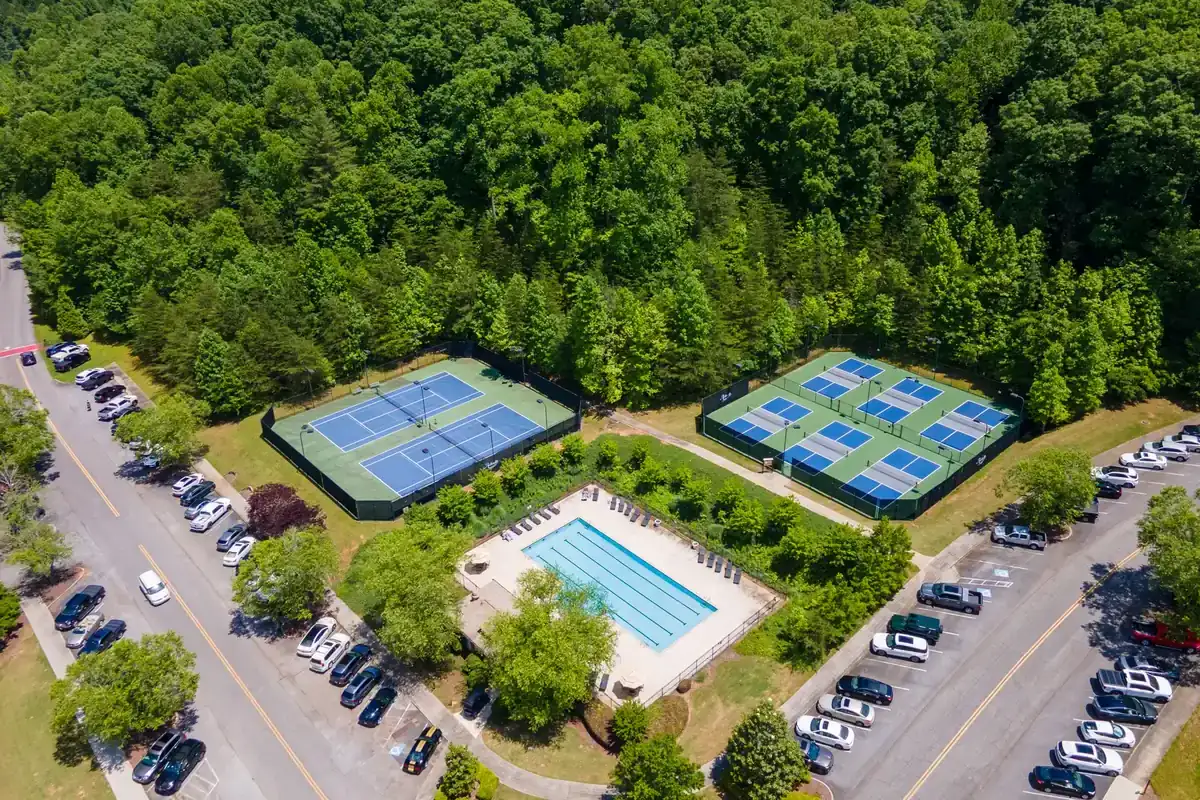
With six dedicated outdoor pickleball courts, a welcoming community of players, and the stunning backdrop of the Blue Ridge Mountains, Achasta is where pickleball in North Georgia truly comes alive.
This guide will walk you through everything a beginner needs to know — from understanding the game, to finding your first paddle, to stepping onto the courts at Achasta with confidence.
What Is Pickleball?
Pickleball is the fastest-growing sport in America. Played on a court roughly a quarter the size of a tennis court, it combines elements of tennis, badminton, and ping pong into a sport that’s easy to learn, endlessly social, and surprisingly competitive at advanced levels. The game is played with a perforated plastic ball (similar to a wiffle ball) and solid paddles, either in singles or doubles format.
Most beginners pick up the basics in just one or two sessions — and many players say it’s the most fun they’ve had on a court in years.
The Basics: Court, Scoring & Rules
A standard pickleball court is 20 feet wide by 44 feet long (for both singles and doubles), with a 7-foot non-volley zone on each side of the net known as “the kitchen.” You can’t volley — meaning strike the ball before it bounces — while standing in or touching the kitchen line.
Scoring is simple: games are typically played to 11, win by 2. Points can only be scored by the serving team. The serve must be made underhand and diagonally cross-court, and the ball must clear the non-volley zone.
The Two-Bounce Rule
When a rally begins, each team must let the ball bounce once before hitting it — the serve must bounce for the receiver, and the return must bounce before the serving team can hit it. After those first two bounces, both teams can volley freely (except from the kitchen).
Your First Game at Achasta
Achasta’s six outdoor pickleball courts are exclusively for residents and their guests. If you’re new to the community or considering a home at Achasta, the courts are a social hub — you’ll find open play on most mornings, with members happy to welcome newcomers and walk you through the game.
The courts at Achasta are well-maintained, with permanent net systems and proper boundary markings. They sit within the broader resort grounds alongside the Achasta Golf Course, Chestatee River Park, and the Achasta Clubhouse.
What Equipment Do You Need?
Getting started doesn’t require much investment. Here’s what a beginner needs:
- Paddle: A mid-weight graphite or composite paddle in the $50–$100 range is ideal for beginners. Look for brands like Selkirk, Paddletek, or JOOLA. Avoid wood paddles — they’re heavy and slow your development.
- Balls: Outdoor balls (like the Dura Fast 40 or Franklin X-40) are the standard for outdoor courts like those at Achasta. They’re harder and have smaller holes than indoor balls.
- Footwear: Court shoes designed for lateral movement are ideal. Tennis shoes work well. Avoid running shoes, which don’t provide the lateral support the sport demands.
- Clothing: Anything athletic works. Many players wear the same gear they’d use for tennis or racquetball.
Pickleball Etiquette
Pickleball is famously welcoming. A few customs to know before your first game: always call the score before serving, call your own faults honestly, and welcome new players for open play. At private communities like Achasta, the culture tends to be relaxed, social, and genuinely supportive of beginners.
Finding Public Courts Near Achasta in Dahlonega
If you’re visiting Dahlonega and aren’t a resident at Achasta, several public courts are nearby:
- Pinetree Recreation Center — 215 Pinetree Way, Dahlonega. Six dedicated outdoor courts plus indoor gym space. Indoor play: Tues/Thurs 8am–4pm. (706) 864-8080.
- Lumpkin County Community Center — 365 Riley Rd, Dahlonega. Indoor play: Mon 8am–2pm, Wed 8am–4pm, Fri 8am–2pm, Sun 2:30–8pm. Free beginner lessons first Sunday monthly. (706) 864-3622.
- Yahoola Creek Park — 1166 Captain McDonald Rd. Two outdoor courts, open dawn to dusk.
Ready to Discover Achasta?
Achasta isn’t just a place to play pickleball — it’s a community built around an exceptional lifestyle. With a Jack Nicklaus Signature golf course, private Chestatee River access, a resort-style pool with Tiki Bar, 3.5 miles of walking trails, and a vibrant clubhouse and grille, Achasta is where mountain living reaches its finest expression.
Explore homes for sale at Achasta or learn more about the Achasta Pickleball Club to see if this extraordinary Dahlonega community is right for you.
Related reading: About Achasta Pickleball — Dahlonega, Georgia’s Private Pickleball Community and Achasta Pickleball Club — Private Courts in Dahlonega, GA.