Quick answer (TL;DR)
Most active pickleball players in the North Georgia mountains play year-round. Dahlonega sits at a foothills elevation that cuts summer heat and keeps winters shorter than higher Appalachian communities. You adjust your schedule for the coldest weeks rather than stopping play. Achasta Golf Club has dedicated courts where residents get consistent access through most of the year.
Playing pickleball year-round in the North Georgia mountains is realistic for most players. Dahlonega sits at roughly 1,400 to 1,600 feet of elevation, which extends the comfortable outdoor window well beyond what low-elevation Georgia offers and keeps winters shorter than communities further into the Appalachians.
What year-round pickleball actually looks like in a mountain climate
When players ask whether North Georgia is a year-round pickleball destination, they usually mean two things: can they avoid a long pause in their regular playing habit, and will court quality hold up through seasonal changes? The answer to both is yes, with some seasonal adjustment in winter.
That adjustment looks different here than in the places players typically compare North Georgia to. Florida and Arizona markets tend to have summer as the difficult season, not winter. In North Georgia’s mountains, it flips: summer is generally more playable than most people expect, and winter calls for some flexibility around the coldest weeks rather than a full stoppage.
The result is a playing calendar that active players describe as genuinely long. Spring, summer, and fall are consistent. Winter is the calibration window, and most players who have been here a full year say their schedule adjusts rather than stops.
Dahlonega’s elevation and what it does to outdoor court conditions
Dahlonega sits in the southern Appalachian foothills, with community elevations running from roughly 1,400 to 1,600 feet. That is a meaningful step above Atlanta’s approximate 1,000-foot baseline and well below the exposed ridge elevations that produce the snowiest Appalachian winters further north.
That mid-range position matters for outdoor court sports in a specific way. The community sits high enough to escape the relentless summer heat that makes Atlanta court play punishing by mid-morning in July, but not so high that it sits in snowpack territory for weeks at a time in January.
For a pickleball player, the practical result is a playing window that runs well into both ends of the year. The summer comfort advantage surprises people most, because mountain destinations carry a mental association with cold rather than with cool summers.
A season-by-season look at pickleball in North Georgia
Spring
Spring in North Georgia, running roughly March through May, is widely considered the best outdoor pickleball window. Temperatures climb steadily, afternoon rain patterns are typically brief, and the season is long enough that players can build or re-establish regular playing groups. The foliage reaches full coverage through this stretch, which provides natural windbreak around many court setups.
Summer
Summer is where the elevation advantage shows most clearly. Afternoon temperatures in Dahlonega run several degrees cooler than Atlanta during peak heat months, extending the comfortable playing window beyond what most low-elevation Georgia markets can offer in July and August. Morning play is typically the preferred window, as it is in most warm-weather markets, but players here report that their comfortable morning window often runs later than it would in Atlanta before heat becomes a factor. Humidity is present but generally lower than coastal Georgia or South Florida.
Fall
Fall, September through November, is often described alongside spring as the second strong pickleball season in North Georgia. Temperatures drop to comfortable ranges across the board, conditions tend to be dry and stable through October, and the mountain colors are worth planning around. Players who moved here for the sport frequently cite fall as the season that confirmed the move was the right call.
Winter
Winter is the calibration window. December through February brings cool to cold temperatures, occasional overnight frost on court surfaces, and a handful of days where outdoor play is genuinely interrupted by ice or wet conditions. What it typically does not bring is the multi-week sustained freeze that closes courts in communities at higher Appalachian elevations.
A typical winter pattern looks like this: check conditions before an early morning session, keep a backup plan for the genuinely cold days, shift to midday on sunny winter days when surface temperatures recover. Most players end up on the court several times per week even in the coldest months rather than pausing entirely.
How Achasta’s courts hold up through the seasons
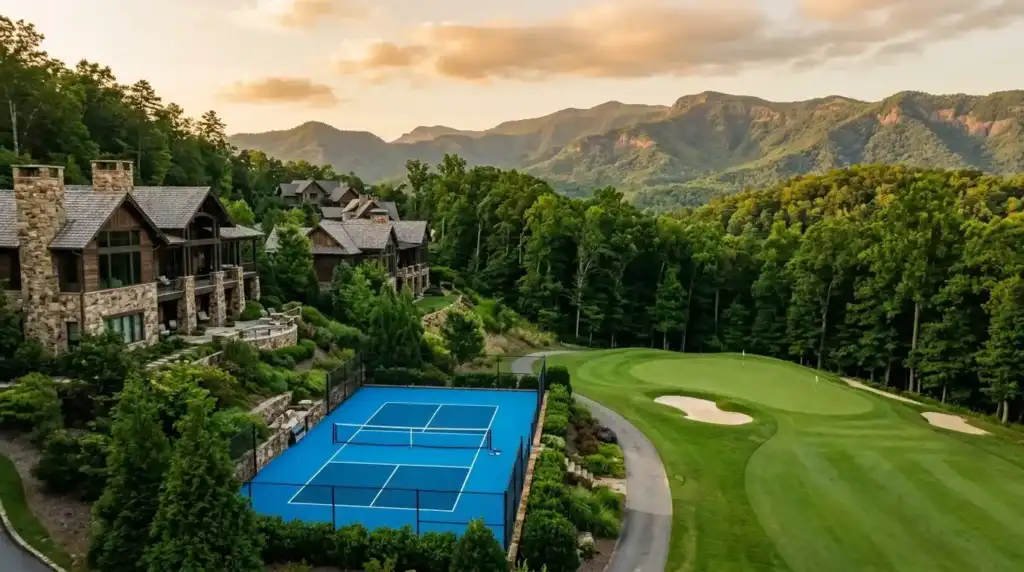
Achasta Golf Club in Dahlonega has dedicated pickleball courts for residents, built for the sport rather than converted from tennis court surfaces. That distinction matters for playing experience and for how quickly surfaces recover after weather events.
A private club setting tends to produce more consistent court conditions than public park facilities because maintenance and access are managed for the residents who use them regularly. Courts in an active private community tend to have better drainage, windscreening, and faster turnaround after a cold snap than a public facility on a general municipal maintenance schedule.
What players should confirm directly with Achasta before relying on any article: whether access hours or court availability change seasonally, how courts are managed after frost or ice events, and what the current process looks like for year-round play. These operational details change and are best sourced directly. The guide to open play and reservations at Achasta covers the practical questions worth asking before your first session in any season.
Achasta sits within a community built around the Jack Nicklaus Signature 18-hole golf course along the Chestatee River. Players considering a sport-driven move here tend to view the dual-sport setup, golf alongside pickleball, as a significant part of what makes daily life work. The full community context is part of why players who tour for the courts often end up asking questions about the broader lifestyle rather than just the court schedule.
For a broader look at the Dahlonega pickleball scene beyond Achasta’s courts, the Achasta Pickleball site covers local options, visiting player questions, and what the North Georgia sport landscape looks like for different player types.
Indoor pickleball options near Dahlonega
A year-round outdoor habit sometimes calls for an indoor fallback during the coldest stretches. Dahlonega and Lumpkin County are still developing their indoor pickleball infrastructure, which is an honest limitation compared to markets where indoor play has had more time to establish.
For current indoor court options near Dahlonega, apps like Pickleheads and Places2Play are updated more frequently than any static guide and will give you a more accurate picture of what is currently available. The broader region, including Gainesville, Cumming, and communities within a reasonable drive, may have options worth mapping out before you decide how to structure a winter backup plan.
Players relocating from markets with well-developed indoor infrastructure should factor this in. The outdoor season here is long, but the indoor supplement is still developing. Most players who have made the move describe this as a manageable tradeoff, particularly those in a private community with quality outdoor courts where seasonal use is higher than at a comparable public facility.
How North Georgia compares to other year-round pickleball markets
The comparison most players make is between North Georgia, coastal Florida, and Arizona. Each handles seasons differently, and the differences are practical rather than marketing.
| Factor | North Georgia / Dahlonega | Florida markets | Arizona markets |
|---|---|---|---|
| Summer outdoor play | More comfortable than FL or AZ at peak heat | Very hot; early-morning windows typical | Very hot; early-morning windows typical |
| Winter outdoor play | Mostly playable; some adjustment on coldest days | Year-round with minimal interruption | Year-round with minimal interruption |
| Indoor infrastructure | Still developing | Widely available | Widely available |
| Private club option | Achasta (dedicated courts + Jack Nicklaus golf) | Varies by community | Varies by community |
| Mountain setting | Chestatee River and forested foothills | No | Desert landscape |
The table is not an argument that North Georgia is the best pickleball market. It is a framework for real trade-offs. Players who want no winter schedule adjustment and access to a large organized-play ecosystem will find Florida or Arizona a better fit. Players who want a private community with cooler summers, a mountain setting, and golf alongside pickleball will find North Georgia harder to match on those specific terms.
For a more detailed breakdown of what communities in this region offer, the guide to pickleball communities in North Georgia covers what to evaluate before committing to a market.
Starting the conversation about a sport-driven move to North Georgia
If the year-round playing calendar is driving your research, the practical next step depends on where you are in the decision. Early-stage research benefits more from a seasonal visit than from reading guides. Short-term-rental rights in Achasta are governed by the HOA covenants, and the current covenant language has not been verified — do not assume a home can be short-term rented, and request the current covenants in writing from the HOA. An evaluation visit works through a community contact or a buyer’s agent who can arrange a proper tour of the courts and the property.
If you are further along and starting to think about a home search, Gold Peach Realty in Dahlonega is the local brokerage for Achasta and surrounding Lumpkin County. Working with an agent who knows the community saves time on the HOA questions that matter most for active players: what current court access looks like, what the governing documents allow, and what is typically available in the market.
Players new to the sport or thinking about getting started can use the guide to getting started with pickleball in Dahlonega as a practical on-ramp before diving into community evaluation questions.
Frequently Asked Questions
Can you play pickleball year-round in North Georgia?
Yes, most active players do. The outdoor season in Dahlonega is long, with spring, summer, and fall offering good court conditions. Winter requires some schedule flexibility for the coldest days, but sustained court closures are uncommon at this elevation compared to higher Appalachian communities further north.
How cold does it get on pickleball courts in Dahlonega in winter?
Winter in Dahlonega brings cool to cold days, occasional overnight frost, and some surface conditions worth checking before an early morning session. Specific temperatures vary year to year. Players report adjusting their schedule for a handful of genuinely cold days rather than pausing play for weeks at a time.
Does Achasta have pickleball courts usable in winter?
Achasta’s outdoor pickleball courts are used through most of the winter season, with some adjustment around the coldest days. For current winter hours, surface management practices, and access details, contact the club directly. Operational specifics are set by Achasta and change.
What months are the best for pickleball in North Georgia?
Spring, roughly March through May, and fall, September through November, are widely described as the best windows. Conditions tend to be consistent, dry, and comfortable across the board. Summer is more playable than most people expect given the elevation. Winter is the adjustment window.
How does playing pickleball in North Georgia compare to Florida?
Florida has a larger organized-play ecosystem, more indoor facilities, and warmer winters. North Georgia has cooler summers, a private mountain community option at Achasta, and a Jack Nicklaus golf course alongside the courts. Florida fits players who want no winter schedule adjustment. North Georgia fits players who prioritize a private club environment and find summer court comfort more valuable than winter warmth.
Is there indoor pickleball near Dahlonega, Georgia?
Dahlonega’s indoor pickleball infrastructure is still developing. For current indoor options in and around Lumpkin County and the broader Gainesville-Cumming corridor, apps like Pickleheads and Places2Play will give you a more current picture than any static guide.
How hot does it get on pickleball courts in Dahlonega in summer?
Summer temperatures in Dahlonega run several degrees cooler than Atlanta, extending the comfortable playing window compared to the Atlanta metro and most of low-elevation Georgia. Players describe mornings as consistently playable well into July and August. Specific temperatures vary by year; the elevation advantage is real but does not eliminate the need for normal summer playing precautions.
Do North Georgia mountain communities have year-round pickleball access?
Achasta Golf Club in Dahlonega is the primary private community in this region with dedicated pickleball courts. Access is tied to residency and guest policies set by the club. Confirm current access arrangements directly with Achasta or through a local agent familiar with the community.
What elevation is Dahlonega, Georgia and how does it affect pickleball?
The Dahlonega area sits at roughly 1,400 to 1,600 feet of elevation, above Atlanta’s approximately 1,000-foot baseline. That difference cuts summer heat, reduces peak humidity, and keeps winters shorter than communities higher in the Appalachians, extending the comfortable outdoor playing season at both ends of the year.
Is pickleball playable in December and January in North Georgia?
Yes, on many days. The coldest weeks in December and January may produce frost on court surfaces or damp conditions that take time to dry out, but sustained multi-week interruptions are uncommon in the Dahlonega foothills. Most players build a flexible winter routine rather than stopping play entirely.
What is the best time of year to visit North Georgia to evaluate pickleball?
Spring or fall give you the most representative picture of daily playing conditions. A visit during peak summer or winter gives you less context about what a typical week looks like. If the sport is a major factor in a purchase decision, a multi-season visit or a direct conversation with a local agent who plays there will be more informative than any single trip.
Are Achasta’s pickleball courts outdoor or indoor?
Achasta’s pickleball courts are outdoor. Indoor court availability at the community is not publicly documented in a source we can verify. For current facility details, including whether any covered or indoor option exists, contact the club directly.
How do you find homes near Achasta’s pickleball courts?
Achasta’s market is small and HOA-governed, which makes working with a local agent more effective than searching MLS listings cold. Gold Peach Realty in Dahlonega works regularly in this area and can help you understand what is available, what the HOA documents allow for active players, and how current listings compare to the community’s typical inventory.
View new Dahlonega, North Georgia listings at Gold Peach Realty, your local experts in Achasta, Lumpkin County, and the surrounding mountain communities. Call (770) 283-1223 to connect with an agent who understands the year-round pickleball lifestyle at Achasta.